Norwegian standard turns wood waste into circular building resource
The construction sector generates more than one third of all global CO2 emissions, and over three billion tonnes of waste per year. Much of this waste consists of wood from demolition and construction processes. Thanks to a recently developed standard for visual strength sortingin which Norway has taken the lead, post-consumer wood can now more easily be revalued as structural building material, supporting a more circular economy.
Revaluing discarded wood from construction
Norway has taken steps to advance circularity in the construction sector by developing national standards for post-consumer wood. “These standards provide engineers, contractors and carpenters with a recognised framework for using post-consumer wood as a safe and viable structural resource, to be reused in load-bearing applications or processed into new wood products”, says Kristine Nore. She was the coordinator of SirkTRE, a Norwegian project that aimed to establish a fully circular value chain for timber, by reusing post-consumer wood in construction.
Standards to unlock circular timber use

Kristine Nore, coordinator SirkTRE
"We prepared several standards, financed by SirkTRE. In addition to the standard on strength grading and evaluating reclaimed timber, we have finalised standards on terms and definitions, and on criteria for assessing cleanliness and contamination. We are also finalising two standards: one on the evaluation of recycled glued laminated timber and one on timber trusses with nail plates. A sixth standard is in the making, covering competence — what knowledge someone who evaluates post-consumer wood needs to have."
“The scale of opportunity is significant”, Kristine highlights. “Most post-consumer wood is burnt for energy, but it could supply up to 30% of all raw material that is needed by the Norwegian timber industry. We could halve today’s wood waste by transforming it back into building material. The standards make this legally and technically possible.”
“Timber can be assigned to different strength classes. We’ve introduced R-classes (‘reuse’) for reclaimed timber, which run parallel to the existing C-classes (‘coniferous’ or ‘softwood’) for virgin timber”, says Kristine. “Engineers already know how to work with C-classes, so the connection is fairly intuitive. When a building is taken down, the timber can be visually evaluated on site, and you’ll immediately know what grade it has and what it can be used for."
Careful deconstruction is key
One year after its introduction, the standard on visual strength grading has made its way to on-site use. “A few businesses started exploring new uses for post-consumer wood. Some focus specifically on careful deconstruction, which is what we really need”, Kristine notes. “Timber from building sites is still often treated only as wood for energy recovery. For it to be reused, it needs to be handled carefully from the moment deconstruction begins. That cultural shift is still underway.”
Demand for post-consumer wood is growing, yet a few things need to change to make wood reuse mainstream, Kristine explains. “Compared to virgin wood, grading and sorting post-consumer wood takes more time. Reclaimed pieces must be graded visually, one by one, before they are sorted and directed to the right use. We are optimising these processes to get them closer to sawmill speed.”
“At the moment, new timber is often cheaper, but rising prices are shifting that balance. The new EU ‘Carbon Removal and Carbon Farming Framework’ (CRCF), adopted in December 2024, grants financial rewards for storing carbon. This can form an important incentive to encourage circularity in everyday construction practices.”
Inspiring wider conversations about circularity
While materials like steel, concrete and aluminium already follow established reuse standards, timber needs to catch up. Promoting circularity in the building sector is essential, and with its large volumes and long-term planning, circular principles can be designed into early stages of development.
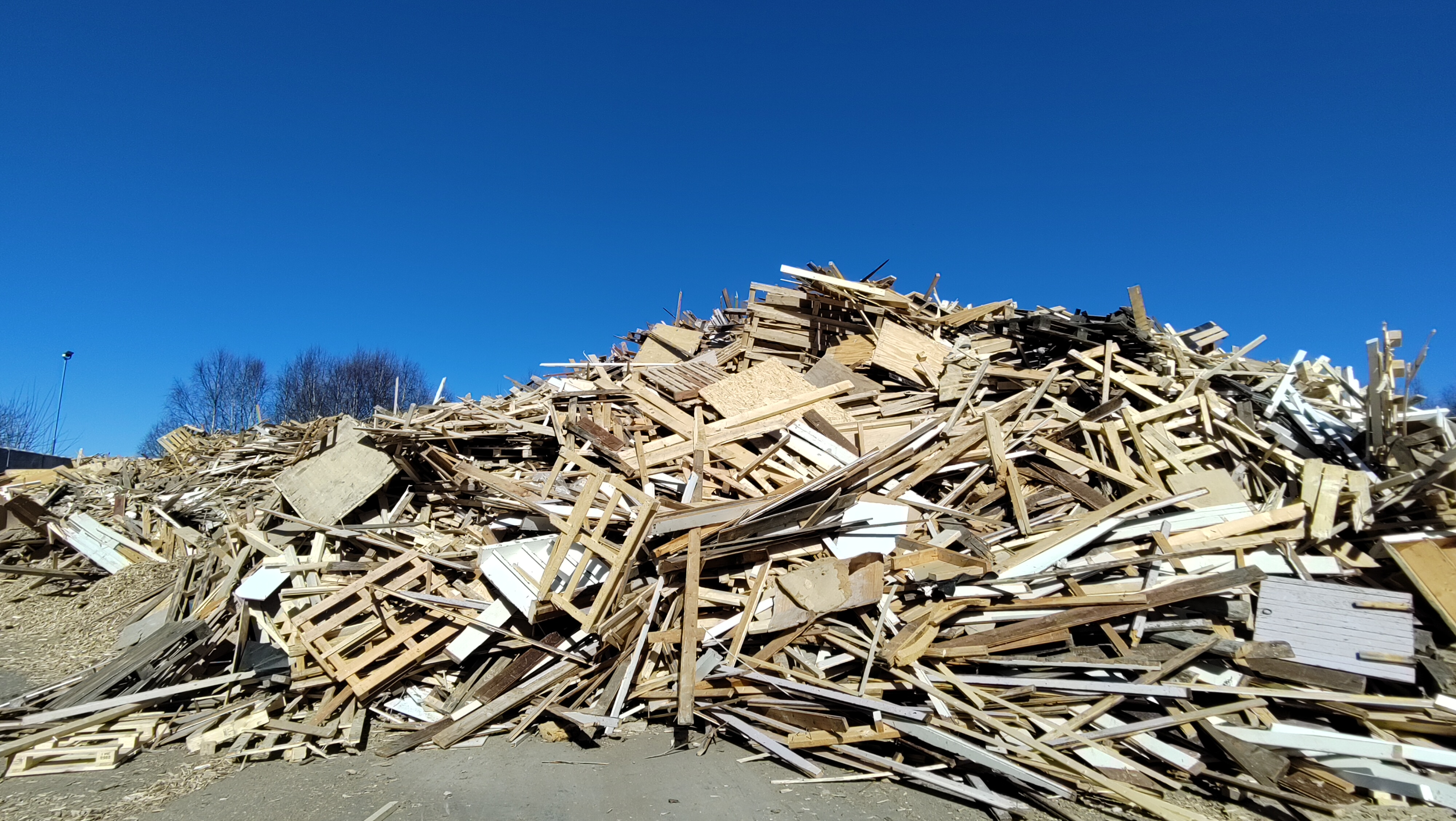
The Norwegian case shows how carefully designed guidelines, government incentives and supporting policies can actually shift mindsets and make a positive impact on the wood construction sector and society as a whole. A European standard for grading post-consumer wood currently does not exist yet, but the national Norwegian standard could serve as an example for broader standardisation.
Source image: Erik Larnøy, NIBIO

Kristine is part of the advisory board of the Horizon Europe project WoodStock. WoodStock explores how policies, standards and market conditions can better support the use of underutilised wood in construction. The Norwegian grading standards are concrete examples of the type of innovation that WoodStock aims to scale up across Europe. By analysing existing regulations and identifying barriers and opportunities, WoodStock will develop transition pathways and policy recommendations by 2028, to enable wider uptake of circular wood solutions.
Source image: Lone Ross, NIBIO
“Timber has been a constant thread throughout my life and career”, Kristine says. “Working on this particular challenge — to keep using wood at its highest possible value — feels like a natural extension of that. Having so many people and organisations around me who care about the same thing makes the effort energising. These standards demonstrate that reclaimed wood is not waste. It is a long-term carbon stock, and an opportunity. We already know how to design buildings with potential reuse in mind. I hope that, in the future, we will see more timber used and reused in more places, with circular designs.”